Q&A: Precision Pro
Kyle Porter: Tell me about when you fell in love with golf.
Clay Hood (CEO and co-founder, Precision Pro): Mine was probably a little bit different because my dad did not play golf. No one in my family played golf.
He wanted to learn. I was probably 11, and we had this little course in our small town of less than a thousand people. He took me out one day. I just really liked it and really took to it over the next couple of years and dropped everything else that I was doing in sports.
I'm not a big talker so you could be up there for hours and just have it on your own.
KP: What was your first job in golf?
Clay: So our next town over actually had three golf courses. My first job was at one of those courses. It was basically washing golf carts to get to play golf for free. And then that evolved the next summer into getting paid, probably five bucks an hour to wash golf carts. I spent most of my day at this golf course, working for a shop, washing carts, and playing on it.
KP: Whenever you were working there, did you have this vision for this company that you would start later, or when did that come about?
Clay: That didn't come about until much later. I played in high school, played at a small college for a bit. Then actually went to college to be a club pro, and did that for a couple of years. Then my first job out of college was a assistant pro, and I did that for a different clubs for 10 or so years.
How Precision Pro Started
Clay: I was coming off the golf pro thing. I was interested in starting something, but I didn't really know what or necessarily how. Then I met Jonah, who’s my partner now. I had this idea of golf training aid, a golf mat and this other putting thing. We started working on these, and it was interesting to build this little thing that we could sell. People bought some. It was never going to be enough to have a company, but It was fun to see, Hey, we made something here and people paid us money for it.
That led in to [Precision Pro]. We're thinking, What could we do for a product that could be interesting?
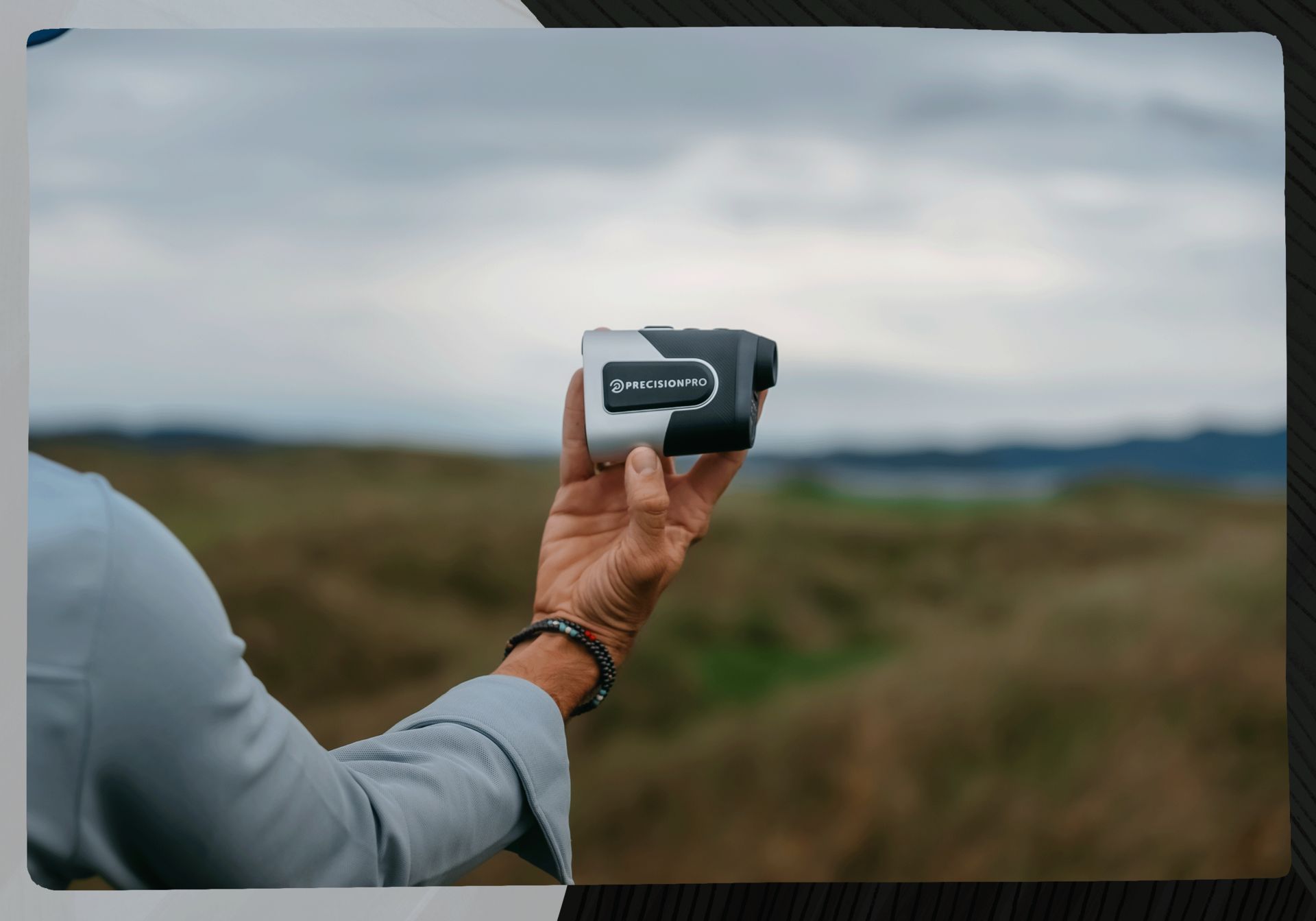
At that time, rangefinders were not very present. Most people didn't have them. They weren't legal. They were very expensive. They were kind of hard to use.
We worked with some suppliers over in Asia and got some samples and went through that and created a brand.
We were early to the market.
A lot of people nowadays would start selling on Amazon or through a website. We actually started by cold calling retailers. And in the first month that we started to do that, we had pre-sold like 300 units. Those came in and we shipped them and they went to stores, and they sold and we sold them more.
That's how we, how we got started. It was basically just calling retail shops.
KP: What was pitch to those retailers? You were calling and saying, Hey, I know this thing's illegal, but do you want to carry it? How did that go?
Clay: Well, people liked them. People still used them. They weren't legal to post a handicap score, which I don't think anybody really cared too much about. You can now.
But the problem was, at the time for these retailers, really the only company that carried them was Bushnell. It was very expensive. And … they just were not very easy to work with from a retailer side, just from pricing and service and everything. We just started, and [retailers were like] This product is not bad, and it's $100 cheaper, and we'll do our best.
That worked.
Introverts Unite
KP: Where did your just love for entrepreneurship and business come from?
Clay: For me, it just came once I tried it. I was never really interested in it. I thought I was going to have a whole career as a club pro. And yeah, it just came along. And once I got into it, I'm head down, obsessive, less social, introvert.
And it's been enjoyable from that aspect.
KP: I'm sure we have several readers that are also introverted. How difficult is it to build a company as somebody who is a self-proclaimed introvert?
Clay: I think it depends. I mean, we, my partner is the opposite, so we balance each other out of that. It depends on what you're doing. If you're selling specifically online, you can do that and be behind the scenes. We were going to be on the retail side. So he does all the sales work and all the outreach. Having him to do that part of it was good because I probably couldn't do that myself or did not have the desire to do that. So I think having someone who balances out on that aspect is just pretty important.
KP: Yeah, I feel the same way. I don't know that I'm totally introverted, but I definitely lean more that direction. Having somebody else that does the sales stuff, it's very life-giving to have somebody in that area.
Company Differentiation
KP: As more and more companies have gotten into the rangefinder space and the golf device space, how hard has it been to maintain a differentiation from those other companies?
Clay: I mean, that's where markets go, especially with the advent of the internet. Ten or 15 years ago, it became easier to find suppliers, sell online. So we started as this value thing, and we rode that for a while. And over the past 2-3 years, we're really making a conscious effort to really become more of a brand, more of a premium brand. And that's been not easy, and it's been a bit of a hard road. But it’s starting to pay off.
Our higher end products are now our best sellers, whereas some time ago, it was the lower-priced products. Our purpose has been to … really focus on innovation, quality, and customer service.
KP: Did you always have the plan to go from a value product to more of a higher-end product, or did that change mid-stream?
Clay It changed mid-stream. We were value in the beginning out of necessity. Over the next few years, we still had this value element. We were quite a bit less than Bushnell was. But we came to see that you need something different to compete over time.
Future Projects
KP: What does the future vision look like? Is it more just iterating on the rangefinder? Is it adding other products? How do you guys view that?
Clay: I think really for us, we want to focus on being a rangefinder company. We've explored other products and we've tried some, and they've never really worked out as well as we want. I think over time, I've realized it always seems like it's better to sell more and grow. And I think we've had periods where we've grown bigger and not made that much profit.
I think we can really sell these nice premium products. We don't have to sell as many as we may have if we were selling this for half price, but we can make more profit. We can have a better company, we can serve those customers we want to better.
Entrepreneurship Advice
KP: Okay, last one. We have a lot of people that are either entrepreneurs or small business owners or whatever. Having done this for, I guess, 13 years now, what is your number one thing that you tell people that are just starting out or that are just getting going on their business that you've learned over that period of time?
Clay: The number one thing I would say is that it just takes longer than you can imagine. It's harder than you can really imagine.
I do feel like you you need to really enjoy what you're doing, whether it be the product or community or some aspect. I think through some of the ups and downs … but if you're doing something that you're not interested in, I think it would be challenging.
So that's always been the thing about still being deeply involved and really liking it. Plus, if you're into it, you're also your customer, and you can really have a better idea of what people want because you can kind of build for yourself.
We appreciate you reading our handcrafted, algorithm-free newsletter about golf. We put everything we have into every newsletter we write, which is why they are frequently 1,682 words like this one. Everything you read and consume was created from scratch by two humans who are absolutely obsessed with the game.
If you ever want to support our business, you can buy Norman merch here or become a Normal Club member (we have over 1,000!) right here.


.svg)