Welcome to today’s newsletter. After this week in the golf industry, it’s time …
Also before we get to it, apropos of nothing specific, a huge shout out to Charlie Golf Co. for making kids clubs and bags that — combined together — are 200x as good as most others for less than 1.5x the total price.
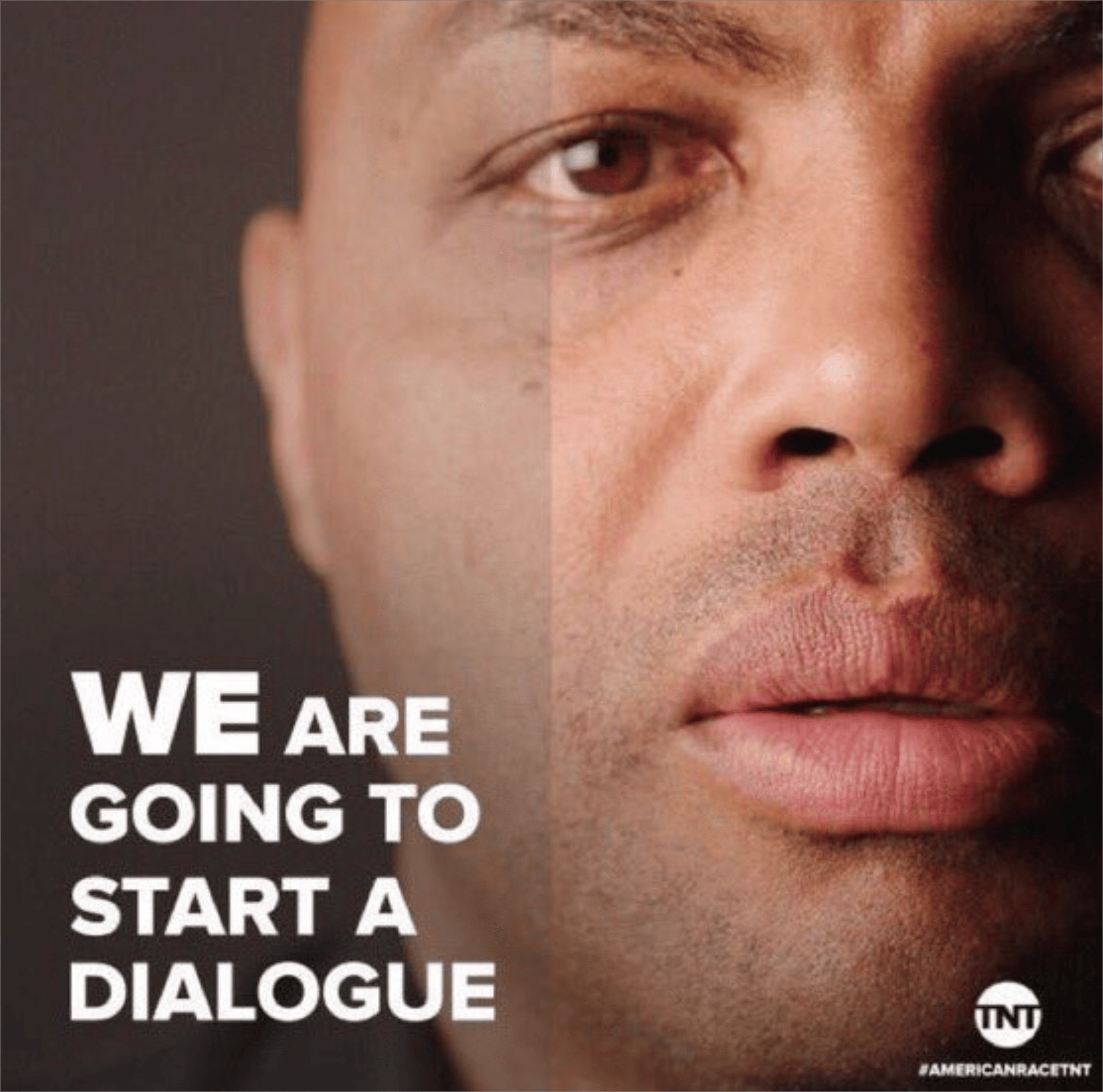
Name drops today: Charles Barkley, Phil, Travelers, Tweeth Mitchell and Ethan Strauss.
We are doing another giveaway with our friends at OMNI, and this one again includes a four-night stay at one of OMNI’s golf resorts later this year AND a free entry into their Generation Cup*, which is already underway at 12 locations nationally with options for the rest of 2026 and into 2027.
Here are those Gen Cup options.
Sept. 13: The Omni Homestead Resort and Spa (Hot Springs, VA) Sept. 27: Omni PGA Frisco Resort and Spa (Dallas) Nov. 28: Omni Barton Creek Resort and Spa (Austin) Dec. 12: Omni Amelia Island Resort and Spa (Jacksonville) Dec. 20: Omni Orlando Resort at ChampionsGate (Orlando) Jan. 24: Omni Tucson National Resort and Spa (Tucson) Feb. 6: Omni Rancho Las Palmas Resort and Spa (Palm Desert)
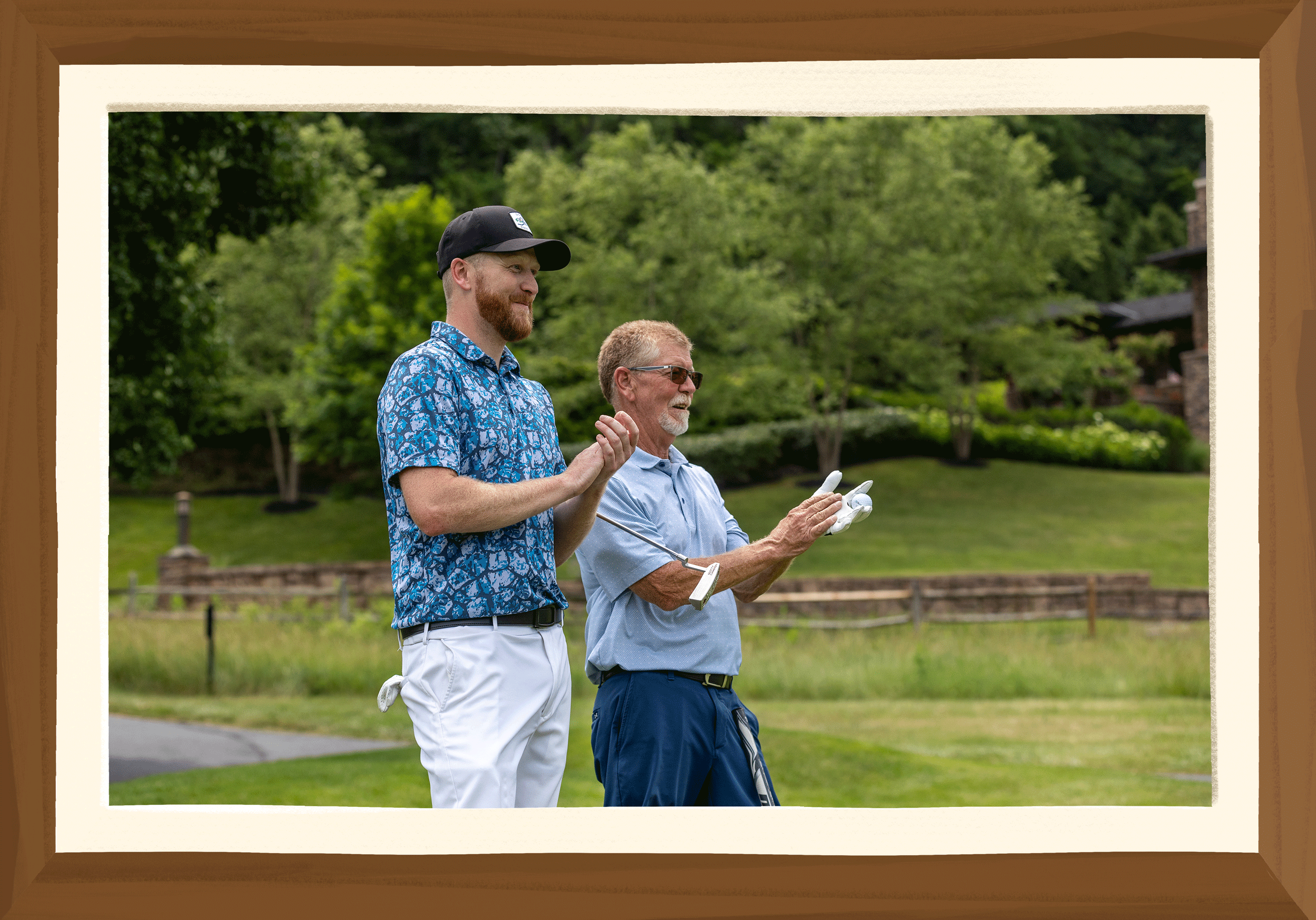
You can check out the Generation Cup right here. It gets a full endorsement from me as one of the best golf experiences I’ve ever had with my son. Great competition, perfect family time and fantastic golf courses.
Me talking to anyone about the Gen Cup.
You can enter to win both the four nights and the free Gen Cup entry at the link below. We will also throw in a goodie bag from Normal Sport, complete with some Norman gear for you to rock when you get out and play.
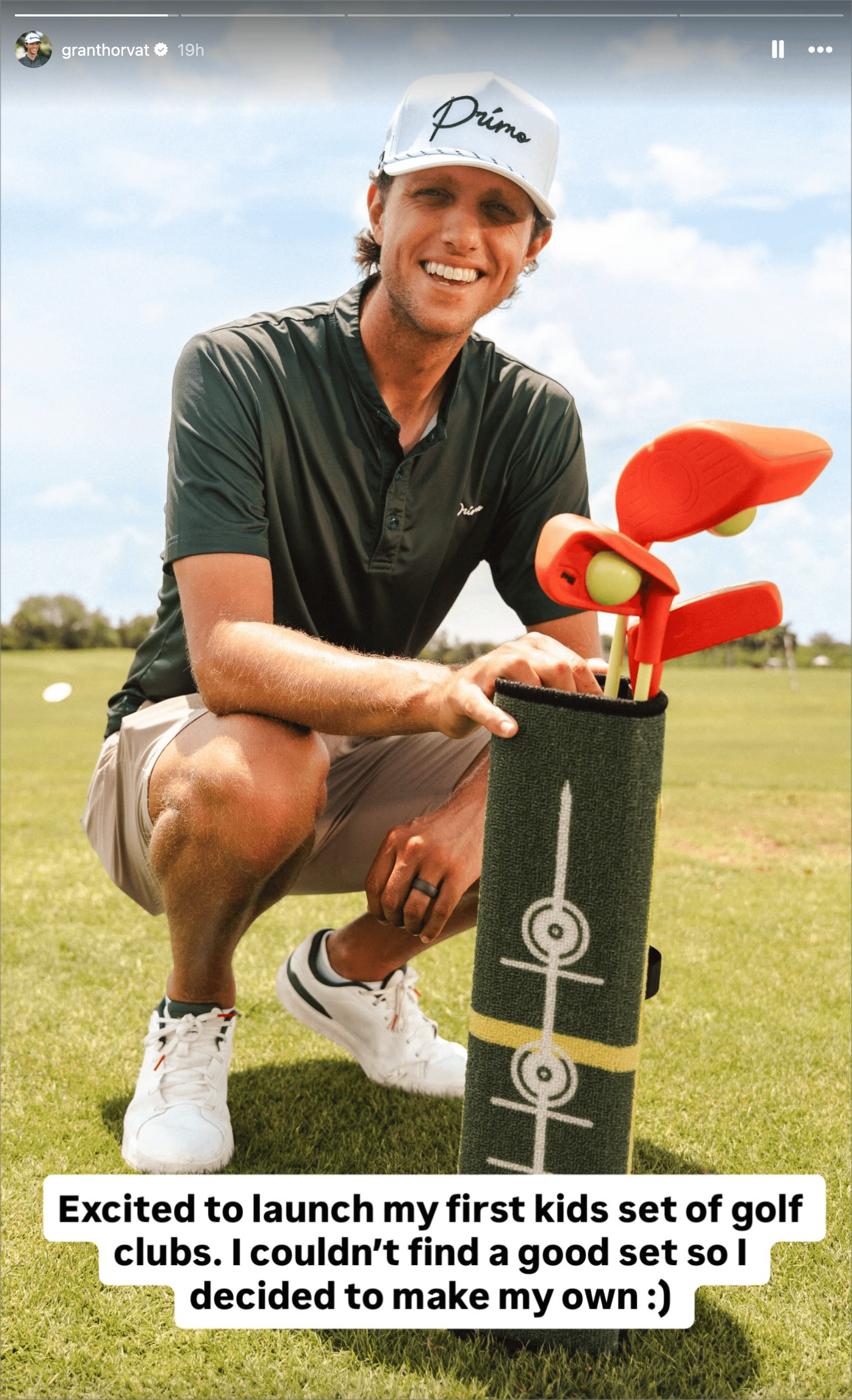
2. Grant Horvat is selling apparently-not-plastic-but-definitely-plastic-looking clubs and foam golf balls wrapped in a putting mat (?) for $200.
3. Chili’s and Rhoback (yes, really) made an incomprehensible commercial in which (I think) Chili’s is promoting a pop-up restaurant on a golf course.
Within these three stories, there are innumerable things for people who truly and deeply love golf to be offended by and annoyed with. Truly a “choose your own adventure” moment in golf history. And honestly, most of that offense and most of that annoyance is completely justified.
The primary takeaway for me — an outsider to all of these people and brands who is simply observing from afar — is that there is an implicit message from the creators of these products and this content.
And that implicit message seems to be that the actual humans who make up the audiences they are speaking to are simply roadblocks to what the creators and the brands are truly after, which is of course your money. In other words, all of it feels extremely transactional.
Some people hate the word "creator" as it relates to the current content economy (some people hate the word "content" as well and also “content economy” … some people, it turns out, maybe just hate everything).
I actually love the word "creator,” though, because to create simply means to manifest out of a unique creativity and skillset we were each given. That is extraordinary. To create is to make something useful or beautiful where previously nothing useful or beautiful existed. To create is to reflect a creator.
The flip side of creation is transaction. Creating is the most human we can be. Transacting is the least human we can be.
Creating (at least in its highest form) is when humans look at the audience who will read, listen to, watch or consume what the creator makes and then attempt to stir the hearts and minds of that audience toward things that are good and great.
We see this even in industries that have mediocre-to-bad reputations like advertising. The best ads make us feel because the best advertisers are really just human psychologists. They understand human nature. They understand people. That is usually good (although I concede that sometimes it can be manipulative).
I think of this Travelers ad. An advertisement about an insurance company!
This kick-started the commercial trend you see everyone jumping on now where brands depict a familial or life story in which time gets compressed and you start thinking about how quickly your own kids age and it kind of destroys you. But this was the first company I remember doing this. It was amazing because it was thoughtful and detailed and human.
Good Good, Horvat and Chili’s/Rhoback (an amazing group of folks that I never thought I would be writing about together) are far from the only culprits here. But each in their own way has seemed to lack a thoughtfulness about the person who was going to receive the thing that they were making.
This is most clear with Good Good (and Callaway!), which — it is extremely obvious at this point — did not consider what they were making. Ethan Strauss even posited that the Good Good sketch was built by AI and acted by humans. Whether that’s true or not, it is indisputable that the process was not thoughtful.
Horvat’s club set is … fine. The thoughtlessness comes from the fact that it costs $200 (!!) which reads like, “I’m trying to buy Phil’s wine collection.”
The Chili’s thing is just the least thoughtful commercial imaginable. All the cliches. Perhaps it’s parody? But if it is, an inability to distinguish this is a form of thoughtlessness itself.
All of this is easy to sniff out for consumers, yes, but I find it to be absolutely infuriating for those of us who are roughly in the same industry. For the people who are deeply and seriously attempting to create great art. Who have enough self respect that — even if they don’t care that much about the person they are creating for — care enough about the act of creating that they think deeply and fully about what is being built.
Here’s how Tweeth said it.
These guys see an untapped market and rush to tap it, without ever stopping to consider if they need to, or if they're the right people to serve that market, or if they even care about it. They do this because they have no north star, no prime directive, no alignment to a specific code.
Transacting sees past the human to the exchange (of goods or services for money).
Creating is an act of selflessness: I spent time making this thing for you. Transacting is an act of selfishness: Here is a thing, give me your time and your money.
I don’t disparage brands or creators trying to make money or to build up their businesses. It takes a lot of trust to engage in the act of creating on the front end and then hope on the back end that it’s enough for a business to exist. And I have made plenty of mistakes of my own as a creator (far more than I have listed here about others).
What I have a problem with, though, is that there is a trajectory of thoughtlessness from so many folks in business (these are simply recent examples) that presumes you — the intended audience member — is not very smart. The process and output we observed this week implies both a lack of care about the audience and a lack of thoughtfulness about the product.
As an aside, when Good Good got a $45 million investment a year and a half ago, I had a few thoughts. First: Great for them! Second: Man there is a lot that goes with that, a lot you have to do to grow that, a lot of strings attached. Toss in the speed things move at online these days, and I would say the default of most people and companies is to run as fast as possible. What was it Zuckerberg used to say? Move fast and break things. That is a good mantra until it’s not.
I personally fight against this within this own business. I feel — physically and literally feel within my body — the draw toward always doing more. Dan Jenkins used to maybe write one thing a week. Now we’re all writing one thing every single hour.
Good Good CEO Matt Kendrick said in SBJ two weeks ago that Good Good aspired to be “the biggest golf company in the world.” This is a great and fine goal, but what it takes to get there is speed. Always more. Always faster. By definition this often requires less thoughtfulness than before.
This is where I feel a bit of sympathy for Good Good. They should not have done this, but they don’t seem to be nefarious. In fact, I think they are in a lot of ways absolutely fantastic. But they do a lot. Everyone does. Just to keep up. It’s a culture that is not aspirational and that I wish would slow down and get quieter. In some ways, their own success made them vulnerable to something like this happening because their own success and growth promoted an insane cycle of more, more and then more.
To be clear, though, a business doesn’t have to choose this vision. And this is where I don’t feel sympathy. This was a choice. One I certainly would not make. Because the upside of capitalism on the internet is unlimited financial gain, but the downside of modern capitalism on the internet is that it is exhausting, and with exhaustion comes thoughtlessness. I’m not sure you get to have both. At least not at the speed with which businesses like this operate these days.
All of this is probably a bit overwrought, but as someone who deeply values thoughtfulness in the work I do and is very proud to have friends in golf who create work that is thoughtful and beautiful, I have found this week to be pretty gross from a lot of perspectives.
So many people involved here have dubbed themselves “creators,” but what is being delivered is nothing more than a barely-veiled transaction. That lack of thoughtfulness (which implies a lack of humanity) is often not a huge deal in and of itself. It happens a lot, and it is usually harmless (like in the Chili’s/Rhoback collab).
But that doesn’t make it any better.
The harmlessness just makes it feel less catastrophic.
Thank you for supporting Normal Sport. As always, we remain a business of words and images that is algorithm-free and handcrafted.


.svg)